
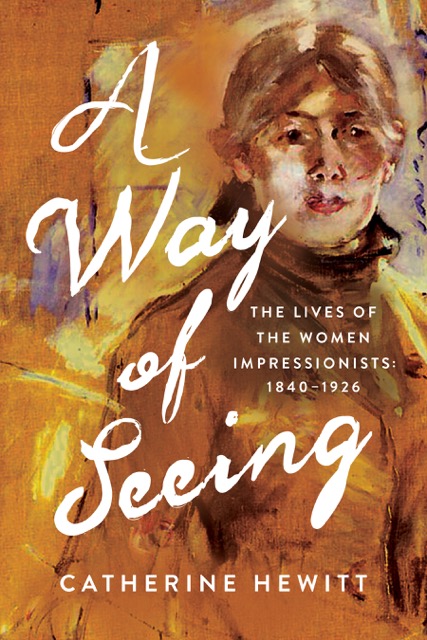
Publisher: Pegasus Books
(to be released spring 2027)
Language: English
The Lives of the Women Impressionists
On 15 April 1874, a sensational exhibition sparked outrage in Paris. Thirty artists branding themselves the Indépendantes had allied against the Paris Salon, the capital’s official art show. With their loosely painted ‘impressions’ of modern life, their canvases flouted the conservative standards enforced by the Académie des Beaux-Arts. To crown it all, among the rebels was a woman. The exhibition shook the public, riled the press and divided the Paris art world that spring. It also changed history.
Nearly 150 years later, the Impressionists still hold audiences enthralled. But while the male Impressionists have dominated the cultural scene, the women have been side-lined. Yet their tale is even more remarkable. In espousing Impressionism, these artists subverted both artistic and social conventions. More; they became spearheads within the group, financing exhibitions, mediating rifts, pioneering new techniques and representing Impressionism at the Salon. All the while, in private, each woman wrestled with her own doubts and fears.
Now, for the first time ever, A Way of Seeing gives these painters a voice. It offers an unprecedented group biography of the four most prominent female Impressionists: Berthe Morisot, Mary Cassatt, Eva Gonzalès and Marie Bracquemond. Chronicling the lives and loves of this revolutionary quartet, A Way of Seeing traces the women’s journey along the perilous path of the male-dominated 19th-century Paris art world and their overlooked role within Impressionism. From the prejudice they encountered, to the repercussions of pursuing a career at a time when ‘nice girls’ were expected solely to reproduce and keep house – the book offers a revelatory perspective on Impressionism.
Founded on rigorous research, A Way of Seeing interweaves these four, interconnecting stories in a dramatic tale constellated by famous artistic faces (including Monet, Manet, Renoir and Degas). Morisot, Cassatt, Gonzalès and Bracquemond were far more than just women painters; together, they emerge as powerful feminine icons and a dynamic force behind Impressionism.